Currently reading



Meine Favoriten
- Katze und Maus in Gesellschaft
- Märchen on einem, der auszof, das Fürchen ze lernen
- Von dem Fischer un syner Fru
- Das tapfere Schneiderlein
- Der gescheite Hans
- Herr Korbes
- Der Herr Gevatter
- Der Hund und der Sperling
- Die zwei Brüder
- Jorinde und Joringel
- Der Fuchs und die Gänse
- Des Teufels rußiger Bruder
- Hans mein Igel

Read only the title essay. I found it biased and preachy. Very little discussion of the animal's perspective.
Assumes that;
Farm or working animals are more natural than other modern interactions with animals.
This form of natural is inherently better.


The pictures are absolutely amazing. I can't get over the movement and atmosphere they capture. It's reminiscent of science fiction, which is more than just the alienness of the insect world, or the made up species.
The writing was occasionally clever or poignant, but mostly it was a distraction from the gorgeous drawings. It seemed to come from a different world than the illustrations. I wasn't too excited about anthropomorphized insects, but by the end I decided it was quite well done.

Der kleine Vampir
 More 100+ year old children. I find this theme somewhat disturbing. With vampires, at least, I've seen it somewhere besides German children books; it seems high schools are overrun with them. Perhaps their brain ceases to develop when they become undead, and so they are forever stuck with thoughts and opinions they had before they died. That doesn't explain why the would want to do childlike or teenagerly things, nor how they keep up with societal changes, so in most cases it seems like it's nothing but a convenient plot device. Although Rüdiger and Anna aren't old fashioned, it does seem as if they have not matured a whole lot. Assuming the way you act is determined entirely by biological age, that might actually make sense.
Kommissar Pillermeier
 I barely understood any of this, but what little I did was most enjoyable. To be reread when my German is better.
A Modest Collection of Slightly Shocking Fairy Tales
 I am a fan of the illustrator's work, which is really the only reason I bought this. I wasn't actually expecting to like the stories, but they turned out to be very clever and cackle-inducing.
Sacred Cows and Golden Geese: The Human Cost of Experiments on Animals
 This is a very biased book, and I want to believe it, so I'm dubious. But, given that I can't find any well researched argument supporting the idea that animals are adequate models for human disease, I am inclined to agree with it for now.
The chapter on organ donation (can an animal "donate" an organ?) seemed like a bunch of alarmist speculation, but that may just be my unhealthy lack of concern for viruses. And the focus on education, prevention and policy change mostly made up for it anyway.
This book also changed my mind about carcinogenics in food and personal care products.


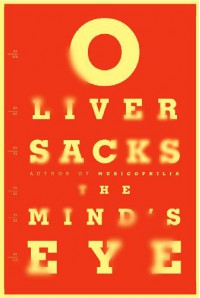 Not only does the cover read 'O liver sacks', but it's also rather interesting. Especially the last chapter.
Rabbit Rue
 I won this through First Reads, here on Goodreads.
This could have been a wonderful book. It should have been a wonderful book. It would have been if someone had read over it once or twice. Some of it was a joy to read, but quite a lot of it was absolutely terrible. The sheer amount of typos, spelling errors, misused words, and the overuse of italics almost makes it not worth reading. It could have been a convoluted escapade of lovely grotesqueries. Yes, parts of it were, but most of it fell short.
I would definitely read the next in the series, if it's better edited.
 I used to think I could understand the nuances and style of an English translation better than the original French. If these translations are anything to go by, that is not the case at all. Some are better than others, but overall the translations lack an absurd amount of specificity. Even if they don't leave out specific descriptions, they still use less specific words than were in the original, even when there's a good equivalent. I don't really understand why. Maybe it would sound clunky in English, but a foreign sounding translation would still be more interesting. But I guess that's why I read in languages I don't understand.
There's also the sound of the language, which is even harder to capture if you're translating literally. You don't even need to know the cadence of the language, or even the words used to notice repetition.
Other than an interesting look at translation, these books are essentially useless as learning tools. The translations are almost never word-for-word, and, as I said, they are consistently less specific. « Guêpe » is translated as "zip", when the author clearly means the bullets sounded like wasps, not that they went zip. This does not help you learn words, and if you can't understand the gist of a phrase, you should be reading something less advanced.
An index, and notes on the harder words and grammatical structures is considerably more helpful.
 Though it was sometimes infuriating, it was highly amusing in small doses. I am disappointed that it ended.
 This is supposed to be a book about perceptions, so I guess I can’t fault him on factual flippancy. He seems to be saying, though, that these perceptions are at least somewhat universal. Which is ridiculous, least of all because I can’t relate to most of them.
He brings up some interesting ideas, but only in passing, before he goes off again on pseudo-psychological babbles, passing them off as universal Truths.
I’m only half way through, hopefully it will get better?
Edit: it didn't. It did, however, make me doubt a few things I took for granted. Not because of any convincing evidence or arguments, but because he seems to take for granted the opposite.